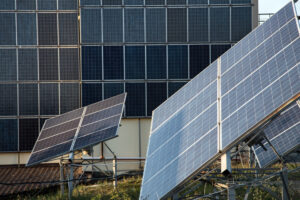
About 800 MW of crystalline silicon solar is aging out in the United States this year, and the International Energy Agency expects roughly 1 GW of modules to reach end of life in 2030, almost 5 million panels weighing 50,000 tons, according to figures reported by pv magazine USA. Every one of those modules gets routed somewhere. Some of them still work. A surprising number of them work well. And the person deciding what happens to them is usually an EPC, an O&M manager, or an asset owner who has never had to make this call before.
That call is the subject of this guide: for a given batch of decommissioned solar panels, do you sell them into the secondary market or send them for material recovery? A real project almost never picks one path for the whole batch. It tests, sorts, and routes. This article explains how to do that sorting with numbers you can defend.
Why This Is a Routing Decision, Not a Disposal Decision
Most first-time sellers frame the question as “how do I get rid of these.” That framing costs money. Decommissioned solar panels are not a single waste stream. A 500-panel rooftop coming off a repower can contain modules still producing near their rated output, modules with hairline cracks that test fine today and fail next year, and modules a forklift smashed on the way down. Each has a different best destination and a different price.
Timing is the second thing first-time sellers miss. The secondary market for used solar panels pays for output, and a batch that would have sold in month one is worth less in month nine, and nothing once the glass has spent a winter uncovered. Recycling cost holds steady while you wait; freight does not get cheaper. So the useful question is not “recycle or resell.” It is “which modules go where, and how fast can I get them there.”
Five Terms You Need Before You Decide
The recycle vs resell decision for solar panels turns on a handful of terms that get used loosely. Here is what each one means in practice.
Resale threshold. The condition line above which a used panel is worth selling rather than recycling. The common industry rule of thumb is a module still producing around 70 to 80 percent of its rated output, roughly 10 years old or newer, with intact glass, frame, and backsheet. That is a rule of thumb, not a law. Our own published guidance frames it as a panel with more than ten years of energy production left, and tells buyers of refurbished modules to look for at least 80 percent of original output. Both framings agree on the point that matters: a panel needs a meaningful working life ahead of it to have a buyer.
Secondary market. The market for solar equipment that has already been installed once, or was bought new and never installed (excess inventory from an oversized order or a cancelled project). Buyers include off-grid users, agricultural operations, smaller installers, exporters serving developing markets, and community or nonprofit projects. Prices are quoted per watt, the same way new modules are priced. Our sell page puts the average value of a used solar panel at $0.05 to $0.60 per watt, against $0.70 to $1.50 per watt for new.
Material recovery value. What the materials inside a panel are worth once it is dismantled: glass (75 percent or more of the mass), the aluminum frame, copper wiring and junction box, silicon cells, and the small amount of silver in the cell contacts. Silver is worth the most per gram and glass the least. The value is real, but for most standard modules it does not cover the cost of the recycling process, which is why recyclers charge a fee rather than paying for scrap panels.
Net economics. The whole-batch math: resale revenue for the panels that sell, minus the recycling fee for the panels that do not, minus transport, testing, handling, and any removal labor you are paying for. It is the only number that tells you whether a project ends in a check or an invoice. Our published range for recycling is about $20 to $50 per panel plus shipping, and our sell page is blunt that shipping and handling is usually the single biggest expense offsetting resale value.
Reverse logistics. Moving equipment backward through the supply chain: off the roof or racking, onto pallets, into a truck or container, and on to a testing facility, a buyer, or a recycler. For solar it includes safe electrical disconnection, palletizing so the glass survives the trip, freight planning, and the paperwork trail. It is the cost line that most often turns a paper profit into a real loss.
Recycle vs. Resell: The Decision in One Table
The table below is the sorting logic we apply when a batch of decommissioned solar panels comes in. It is a guide, not a guarantee. The final call always waits for testing.
| Condition | Age | Output (share of rated) | Damage | Quantity | Paperwork need | Recommended path |
|---|---|---|---|---|---|---|
| Excess new, never installed, in original packaging | 0 to 3 years | Near 100 percent | None | Any pallet-size lot | Bill of sale, original spec sheets | Resell (highest value per watt) |
| Working, clean glass, intact backsheet | Under 10 years | 80 percent or higher | None visible | 100 panels or more | Test report, bill of sale | Resell |
| Working, light soiling or minor frame dents | 10 to 15 years | 70 to 80 percent | Cosmetic only | 100 panels or more | Test report with disclosed output ratio | Resell, priced lower; recycle the rejects |
| Working but mixed brands and wattages, unknown history | Any | Unknown until tested | Unknown | Any | Batch test results | Test first, then split the lot |
| Producing, but under the threshold | 15 years or more | Under 70 percent | Yellowing, delamination, hot spots | Any | Certificate of Completion from recycler | Recycle (small off-grid uses are the exception) |
| Cracked glass, broken cells, snail trails | Any | Irrelevant | Physical damage | Any | Certificate of Completion, recovered-materials report | Recycle |
| Storm, fire, or flood damaged | Any | Irrelevant | Structural | Any | Certificate of Completion, hazardous-handling record | Recycle, with hazardous-materials handling |
| Thin-film (CdTe, CIGS) modules | Any | Any | Any | Any | Specialized recycler documentation | Recycle through a facility equipped for that chemistry |
| Fewer than 100 panels, residential scale | Any | Any | Any | Small | Varies | Direct sale or a marketplace listing; commercial buyers typically start at 100 panels |
Two rows deserve a comment. The “test first” row is where most utility-scale batches actually land, because a farm decommissioned after a hail event or a repower rarely arrives sorted. And the thin-film row matters because cadmium telluride and CIGS modules need different handling from crystalline silicon; resale buyers for those are rare, and the recycler has to be set up for the chemistry. Treat them as a recycling stream from the start and confirm the facility’s capability in writing.
When Resale Wins
Resale wins when three things line up: the decommissioned solar panels still produce, they are physically sound, and there are enough of them to make the freight worth it.
Output is the first gate. Most manufacturers guarantee 80 percent or higher output for the first 20 years, with average degradation under 1 percent a year, so a well-kept 10-year-old module is usually still inside the resale threshold. That is why early repowers are the richest source of resale-grade used solar panels: when a developer swaps 300 W modules for 550 W modules on the same interconnection, the old modules are often only eight to twelve years into a 25-year life. Those panels have buyers.
Physical condition is the second gate, and it is less forgiving than people expect. A panel can flash-test perfectly and still be unsellable because the backsheet is cracked, the junction box is water-damaged, or the frame is bent enough that it will not sit flat in a rack. Secondary-market buyers are installing these modules, not studying them, so they reject anything that will create a warranty call later. Snail trails, delamination, and browning of the encapsulant all say a module is heading downhill even if today’s output number looks fine.
Quantity is the third gate, and it is where the economics come together or fall apart. Our sell page says it plainly: shipping and handling is usually the biggest expense, so a volume quantity to average out those costs is important. A 40-panel lot might be worth $2,000 on paper and cost nearly that to palletize and ship. A 2,000-panel lot from one site, uniform brand and wattage, with the original datasheets, is a different product. That is why commercial buyers, including us, typically start at 100 panels.
When those three gates are open, resale returns cash to the asset owner instead of an invoice, and it keeps a working module producing power somewhere else for another decade. Recycling recovers materials. Reuse recovers the whole panel.
When Recycling Wins
Recycling wins when a decommissioned solar panel has no realistic buyer, or when the cost of finding that buyer exceeds what the buyer would pay.
Physical damage is the clearest case. Cracked glass, broken cells, and fire or flood exposure put a panel outside the resale threshold regardless of age. There is no repair economics for a shattered module; the labor to fix it costs more than a replacement. These panels go straight to material recovery, and the sooner the better, because broken glass and exposed cells are a handling hazard on site.
Low output is the second case. Used solar panels producing under about 70 percent of their rating have a thin market. Some off-grid and hobby buyers will take them at very low prices, but at commercial volumes that market absorbs a few pallets, not a farm. Once you subtract freight, the resale revenue on a 60-percent module is often below the recycling fee you would have paid anyway, with a lot more effort and time in between.
Chemistry is the third case. Thin-film modules, and any crystalline module that fails a toxicity characteristic leaching procedure (TCLP) test, need a documented hazardous-materials pathway. Our own blog has pointed out that some panels pass TCLP while others do not, even among similar models from the same manufacturer, so the test result decides the classification, not the brand name. That variability is one more reason to test rather than assume.
Paperwork is the fourth case. If your lender, landowner, or state permit requires proof that modules were handled by a recycler and diverted from landfill, resale can complicate the closeout. A bill of sale and a chain-of-custody record may satisfy it, but many decommissioning agreements were written with a recycling certificate in mind. Read yours before you decide.
Test First, Then Route: How the Sorting Actually Works
Because most real batches contain both resale-grade and recycle-grade modules, the practical workflow is a triage.
Intake. The seller submits details or photos: brand, model, wattage, age, quantity, condition, and site location. An initial estimate goes back covering the likely resale share, the recycling scope, and the logistics plan; our stated target is a personalized quote within 24 hours on business days. Photos matter more than sellers think. A clear shot of the label, the glass, and the backsheet on a sample of panels can save a wasted truck.
Sample testing. On arrival, or on site for large lots, a sample of modules gets a visual inspection and electrical testing. Our published guidance on evaluating used panels describes professional testing services checking 15 to 50 modules from each batch through flash tests and degradation assessments, with wet leakage tests to confirm the modules still meet safety standards. A flash test measures actual power output under a controlled light pulse; the ratio of that number to the nameplate rating sets the resale price. Wet leakage testing checks that the insulation still holds when the panel is wet, which is the difference between a safe second life and a liability.
Sort and grade. Modules are split into resale grades and a recycle pile. Resale-grade panels get cleaned, repaired where the fix is minor (a junction box, a connector), and re-tested. On our buy side, that refurbishment process runs visual inspection, cleaning, testing, repair, and reassembly, and the test result for each panel is recorded in a database that a buyer can request. Modules in our refurbished panel inventory carry a 30-day warranty against defects in workmanship or materials.
Route. Resale-grade used solar panels are listed for buyers or matched to standing requests. Recycle-grade modules go to dismantling and material recovery: frame and junction box removed, glass separated, metals and silicon recovered, hazardous fractions handled under the applicable rules. The recycling side ends with a report of recovered materials and a Certificate of Completion.
Insist on this workflow, whether you use us or anyone else, because it converts a guess into a number. Before testing, a seller has an opinion about how many panels are resale-grade. After testing, they have a percentage, a price per watt, and a recycling fee for the remainder. That is when the recycle vs resell decision for solar panels stops being a debate.
Where Second-Life Panels End Up
Sellers often ask where used solar panels actually go once they leave the site. The honest answer is “a lot of places that do not need the newest module on the market,” and knowing those destinations helps explain why the secondary market pays what it pays.
Off-grid and remote power is the largest category by variety. Cabins, ranches, telecom sites, pumping stations, and remote monitoring gear do not care whether a module is 300 W or 550 W; they care whether it is cheap, works, and can be replaced easily. Our own guidance has noted that panels producing below resale thresholds can still power small off-grid applications, from garden lighting to a remote cabin, which is the low end of this market.
Agricultural use is the second. Farms put second-life used solar panels on well pumps, electric fencing, livestock water, barn lighting, and small ground-mounts where land is not the constraint and a lower-efficiency module just means a slightly larger array. Uniform lots sell well here, because a farmer building a 20 kW pump system wants 60 identical panels, not a mixed pile.
Export to developing markets is the third and, by volume, often the biggest outlet for commercial lots. Where grid access is unreliable or absent, a working used module priced in the tens of cents per watt competes with any alternative. This is where palletized, tested lots of several hundred to several thousand modules move, and it is why the volume gate matters: exporters buy by the container, not by the panel.
Community and nonprofit projects are the fourth. Schools, clinics, and community centers in underserved areas receive donated or heavily discounted used panels through nonprofit programs. Our guidance on disposal options has pointed out that some donation programs require modules producing at least 50 percent of rated power and issue tax-deductible receipts, a real option for panels sitting just under the commercial resale line.
A Worked Example Using Our Published Ranges
The numbers below are hypothetical. They use only the value and cost ranges published on our own pages, and they leave out freight and removal labor, which vary too much by site to generalize. The point is to show the shape of the math, not to quote a project.
Assume an O&M provider is taking down a 1,000-panel commercial array of 300 W modules, twelve years old, ahead of a repower, and wants to sell used solar panels where it can and recycle the rest. After sample testing, 700 panels test above 80 percent of rated output with clean glass, and 300 are rejected for cracks, delamination, or low output.
The 700 resale-grade panels, at 300 W each, are 210,000 W. At our published used-panel value of $0.05 to $0.60 per watt, that lot is worth $10,500 at the bottom of the range and $126,000 at the top. Where a real lot lands depends on brand, wattage, uniformity, and test results; a matched lot of a known brand with datasheets sits far higher than a mixed lot of unknown history.
The 300 recycle-grade decommissioned solar panels, at our published recycling cost of about $20 to $50 per panel, cost $6,000 to $15,000 to recycle, plus shipping.
Before freight, testing, and removal, the batch nets somewhere between a small positive number and a large one. Now add the reverse logistics. If the array is 1,500 miles from the nearest buyer or recycler, freight on 1,000 panels can consume much of the low-end resale figure, which is why our sell page warns that shipping and handling is usually the biggest expense offsetting value. The same 1,000 panels shipped 150 miles are a different project.
Now run it the wrong way, which is what happens without testing. Recycle all 1,000 at $20 to $50 per panel: a $20,000 to $50,000 invoice plus shipping, and 700 working modules turned into cullet and scrap aluminum. Or try to sell all 1,000 untested: the buyer walks, or prices the lot as if every panel were the worst one, and the seller still pays to dispose of the rejects later. Testing first is how the asset owner keeps the upside.
Paperwork: What Each Path Should Leave You With
Whichever way the decommissioned solar panels go, the closeout is a document set, and the two paths produce different documents.
For resold panels, expect a test report showing the measured output of the sample or of each module, a bill of sale identifying the buyer and the quantities, and, if your permit or lender requires it, a chain-of-custody record showing where the modules went. Refurbished panels sold onward should carry a disclosure of measured output as a share of the original rating and any repair history, which is also what a careful buyer of used solar panels should ask for.
For recycled panels, expect a report of recovered materials by fraction (glass, aluminum, copper, silicon, and where applicable silver) and a Certificate of Completion confirming the modules were processed and the hazardous fractions handled under the applicable rules. Our recycling process ends with both. If a decommissioning agreement, lease, or state permit requires proof of diversion from landfill, this is the document that satisfies it.
On certifications: know the common standards and ask about them, without treating any badge as a substitute for the documents above. R2 (Responsible Recycling) is an electronics recycling standard administered by SERI that, since a 2024 appendix, includes specific requirements for photovoltaic modules, including output and repair-history disclosures for refurbished panels. e-Stewards is a separate electronics recycling standard. ISO 14001 is a general environmental management standard, not specific to solar. Ask any vendor to confirm its current certifications and their scope in writing, then ask for the sample test report and the Certificate of Completion, because those are what an auditor will want to see.
Mistakes That Push Resale-Grade Panels Into the Shredder
A few avoidable habits destroy resale value on otherwise good batches of decommissioned solar panels, and push modules that could have been sold as used solar panels into the recycling line.
Removing modules without a storage plan. Panels stacked glass-to-glass on bare ground, or left leaning against a fence through a season, lose their resale grade to micro-cracks and moisture. Palletize them with corner protection the day they come down.
Mixing lots. When modules from three arrays end up in one pile, the buyer prices the pile at its worst component. Keep brands and wattages together, with the datasheets.
Waiting. A repower is planned a year ahead, but the fate of the old modules is often decided the week they come off, when the crew is on site, the container is booked, and the fastest option wins. Get intake photos and a quote before removal starts so the sort happens as panels come down.
Assuming the whole batch is scrap. Hail can shatter part of an array and leave the rest untouched. Insurers and owners who write off the whole site leave real money on the ground.
Treating removal as a separate job. Safe electrical disconnection and careful de-racking are part of reverse logistics. A crew that pops panels off with a pry bar turns resale-grade modules into recycle-grade ones in an afternoon. If you are staging a full site takedown, our solar farm decommissioning services page describes how removal, transport, and routing fit together on a commercial or utility-scale project.
Frequently Asked Questions
At what point is a used solar panel no longer worth reselling?
The common industry rule of thumb is around 70 to 80 percent of rated output and roughly 10 years old or newer, with no structural damage. Below that, the pool of buyers shrinks to small off-grid users, and at commercial volumes the freight usually eats the revenue. Our own guidance frames the line as more than ten years of production left, and tells buyers of refurbished modules to look for at least 80 percent efficiency. A flash test settles the question for any specific panel.
Who buys decommissioned solar panels in bulk?
Commercial asset recovery companies that test, refurbish, and resell modules; exporters serving developing markets; and, at smaller scale, off-grid and agricultural buyers. Commercial buyers typically want lots of 100 panels or more, uniform brand and wattage, with condition photos and ideally the original datasheets. Lots under 100 panels are usually better served by a direct sale or a marketplace listing; our own published guidance says the same.
Does recycling a solar panel pay for itself through the recovered materials?
For most standard crystalline silicon modules, no. Silver, copper, and aluminum have real value, and glass has a little, but the recovery process costs more than the materials fetch, which is why recycling carries a fee. Our published range is about $20 to $50 per panel plus shipping. The way a project reaches zero net cost is by letting the resale-grade panels pay for the recycling of the rest, not by expecting the recycler to pay for scrap.
What documents should I get when panels are recycled?
A report of recovered materials by fraction and a Certificate of Completion confirming the modules were processed and hazardous fractions handled under the applicable rules. If your permit, lease, or lender requires proof of landfill diversion, that certificate is the document that satisfies it. Ask for it before the trucks leave, not after.
Key Takeaways
- Decommissioned solar panels are not a single waste stream. Most commercial batches contain both resale-grade and recycle-grade modules, and the money is in sorting them.
- The resale threshold is a rule of thumb (around 70 to 80 percent of rated output, roughly 10 years old or newer, physically sound), and a flash test is what turns the rule into a decision.
- Resale wins on working, undamaged, uniform lots of 100 panels or more. Recycling wins on physical damage, low output, thin-film chemistry, and permits that require a recycling certificate.
- Material recovery value is real but does not cover the recycling fee for standard modules; the resale-grade panels are what pay for the recycling of the rest.
- Freight is the single biggest offset to resale value. Volume, uniformity, and distance to the buyer or recycler decide whether a project ends in a check or an invoice.
- Close out with documents: test reports and a bill of sale for resold modules, a recovered-materials report and Certificate of Completion for recycled ones.
Conclusion
The recycle vs resell question for solar panels has a boring answer, and the boring answer is the profitable one: test the batch, sell what still has a working life, recycle what does not, and keep the paperwork for both. The sellers who lose money decide before testing, in either direction. The ones who come out ahead treat the old array as a mixed-grade asset and route each grade to the place that pays, or costs, the least.
If you are weighing whether to recycle or resell decommissioned solar panels from a commercial or utility-scale site, The Solar Recycling Company buys used solar panels, inverters, and batteries for resale and recycles the modules that cannot be reused, nationwide, for EPC contractors, commercial solar installers, O&M providers, developers, and utility-scale asset owners. Send us the details or photos of the lot and you will have a personalized quote within 24 hours on business days.