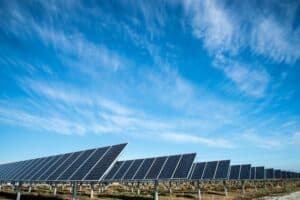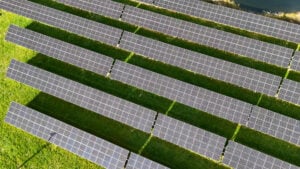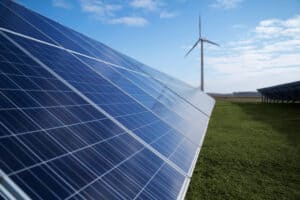
The first large solar farms built in the United States are now old enough to come down, and most of the people who own them have never taken one apart. That is the uncomfortable part of utility-scale solar decommissioning. The build side of the industry has twenty years of practice. The teardown side has almost none, and the volume is arriving anyway: NREL researchers put the range for cumulative solar module waste by 2050 at 54 million to 160 million metric tons worldwide.
A number that large hides a simple operational question. When a 20 MW or 200 MW site reaches the end of its lease, its permit or its useful output, who physically disconnects it, unbolts it, ships it, sells or recycles it, puts the field back the way it was, and hands the owner a file that proves all of that happened? The answer most asset owners want is “one company.” That is what turnkey solar decommissioning means, and this guide walks through it end to end.
What “Turnkey” Utility-Scale Decommissioning Means
Turnkey decommissioning means one vendor owns the whole sequence and the paperwork. You turn the key, in the old sense of the phrase, and the project is done: the site is de-energized, cleared, restored, and every module, inverter, rack and reel of cable has a documented destination.
The alternative is how most early projects were handled: an electrical contractor to disconnect, a demolition crew to pull racking, a freight broker to move pallets, a scrap dealer for the steel, a separate recycler for the modules, a landscaping firm for the ground, and the owner’s own staff stitching invoices and disposal receipts together afterward. Each hand-off is a place where a pallet gets lost, a hazardous-waste determination gets skipped, or a landowner’s restoration clause gets forgotten.
A turnkey solar decommissioning scope typically covers:
- Survey and plan. Inventory, condition assessment, hazard review, permit check, written sequence.
- Utility coordination and de-energization. Notification, disconnection at the point of interconnection, verified isolation.
- Removal. Modules, racking or trackers, inverters, transformers, cabling, and foundations to the permitted depth.
- Reverse logistics. Palletizing, staging, freight and tracking from field to buyer or recycler.
- Resale-versus-recycle sorting. Testing functional equipment for the secondary market; routing the rest to recycling.
- Land restoration. Grading, decompaction, reseeding and whatever the lease or ordinance specifies.
- Documentation at handover. Manifests, weight tickets, recycling certificates, a recovered-materials report and a closeout package.
Here is the opinion part. Below roughly 100 panels, turnkey is overkill; a good electrician and a recycler will do. Above a few thousand modules, the coordination cost of a multi-vendor teardown climbs faster than the labor cost, and a single accountable vendor is cheaper even when its day rate looks higher.
The Utility-Scale Solar Decommissioning Process, Step by Step
Each step below stands on its own. In practice they overlap: palletizing starts while de-racking is still moving down the rows, and resale sorting often begins at a staging yard before the last foundation is out of the ground.
Step 1: Pre-Decommissioning Survey and Decommissioning Plan
Every solar farm decommissioning project starts with a walk of the site and three documents: the as-built drawings, the original permit or lease, and the interconnection agreement. The survey records module count and model, string layout, inverter and transformer inventory, racking type (fixed-tilt or tracker), foundation type (driven pile, ground screw, ballast or concrete pier), cable routing, fencing, roads and stormwater structures. It flags hazards: cracked modules, thin-film modules, batteries, transformer oil, and any sign of previous land use that could complicate excavation.
The decommissioning plan is the written output. A usable plan says who does what, in what order, with what equipment, and how each waste stream will be classified and where it will go. It cites the site’s specific permit conditions, because many jurisdictions require the plan to be filed or a bond to be released before the field is cleared. Our own planning guide notes that removal specifications often run to three feet below grade on non-agricultural land and four feet on agricultural land, so the plan should state the depth the permit actually requires rather than assume one.
Cost belongs here too. The same guide cites an industry range of roughly $30,000 to $56,300 per megawatt for utility-scale solar decommissioning, with resale of modules, racking, steel posts and copper wiring as the main offsets. Treat any per-megawatt figure as a starting assumption, not a quote; access, foundation type and how much equipment is resalable move it a long way in either direction. Our guide to decommissioning plan considerations covers financial assurance and reporting cadence in more detail.
Step 2: Utility Notification and Grid Disconnection
A utility-scale site is connected under an interconnection agreement, and that agreement almost always requires written notice before the plant is taken permanently offline. Notice goes to the utility (or the transmission operator for larger sites), and in many states to the public utility commission and the county.
Grid disconnection is a coordinated event, not a switch someone flips on a Tuesday morning. The utility opens the point of interconnection on its side, the plant operator opens the main breaker on the plant side, and both confirm the site is islanded, meaning it can no longer push power onto the grid or receive it. Revenue metering is read for final settlement. Until the interconnection is formally terminated, the plant is still a generator in the utility’s eyes, with the reporting and safety obligations that go with it, so in a turnkey decommissioning scope this paperwork is the vendor’s job, not an afterthought.
Step 3: Electrical Isolation and Lockout-Tagout
Grid disconnection removes the grid from the site. It does not remove the electricity. Every module keeps producing direct current whenever light hits it, and inverters, capacitors and any batteries hold stored energy after they are switched off. Electrical isolation is the process of putting every one of those sources into a verified safe state before anyone touches a connector.
Isolation runs in a set order. Alternating current is opened first (switchgear and inverter AC disconnects), then the direct current side (combiner boxes and inverter DC disconnects), then string-level connectors. Opening DC under load causes arcing that can burn a technician and damage equipment, so AC comes first every time. Crews then test for absence of voltage at each isolation point and cover or face-down the panels being worked on.
Lockout-tagout keeps the isolated state locked. “Lockout” means placing a physical lock on an energy-isolating device (a breaker, a disconnect switch) so it cannot be operated until the lock is removed; “tagout” means attaching a tag stating the device must not be operated. The definitions come from the OSHA lockout-tagout standard, which covers servicing and maintenance of equipment where unexpected energization or release of stored energy could injure an employee. On a solar decommissioning site, that describes every combiner box and inverter in the field.
Our safe-dismantling protocol lists complete electrical shutdown and isolation as the first requirement, ahead of personal protective equipment, hazardous-material handling and structural checks, and requires technicians to confirm panels are disconnected before dismantling begins. The vendor owns this procedure and its records: the lock log, the test results and the sign-off before demolition equipment enters the array.
Step 4: Module De-Racking and Handling
De-racking is the removal of modules from their mounting structure. It is labor-heavy, repetitive and the single biggest determinant of how much of a decommissioned solar farm will be resalable, because a module that leaves the rack cracked is a recycling module no matter how well it performed an hour earlier.
The sequence: disconnect the string connectors and label or cut the leads depending on whether cable will be recovered by reel or as scrap; remove the clamps or bolts holding each module to the rails; lift it clear; carry or convey it to the row-end staging point. On tracker systems the tracker is parked flat and locked first.
Handling rules are simple and routinely broken. Modules are carried by the frame, never by the junction box or cables. They are not walked on, stood on end in wind, or dropped face-first onto gravel. Thin-film modules and anything with broken glass are segregated at the row end rather than mixed into the resale stack, so sorting later starts with clean piles.
Step 5: Palletization and Reverse Logistics
Palletization is packing loose modules into shipping units that survive a truck ride. Reverse logistics is moving those units from the field to wherever they go next: a buyer, a refurbishment yard, a recycler or a scrap processor. “Reverse” simply means the equipment is flowing back up the supply chain instead of down it.
Our published guidance on safe removal and transport is specific about packing: stack modules on pallets with the first units glass-down and the last unit glass-up, add corner protectors and foam pads across the frames, place cardboard or plastic between every two modules, strap near the corners rather than across the middle, keep each stack under 25 to 30 modules, and label every pallet “Not Stackable.” The reason for that detail is in the same guidance: one in five panel shipments arrives with breakage damage. On a 10,000-module solar farm decommissioning job, careless packing can turn 2,000 resalable modules into recycling feedstock before they reach the buyer.
Freight on a utility-scale decommissioning project is a scheduling problem as much as a trucking one. A single acre of fixed-tilt array can yield several truckloads, so the plan sets a loading cadence, a staging area and a manifest for every load. Hazardous modules (see Step 7) travel on a hazardous-waste manifest to a permitted facility; everything else moves under a bill of lading with weight tickets kept for the closeout file. When the vendor owns logistics, it also owns the tracking, which is how chain of custody (Step 9) gets built.
Step 6: Racking, Tracker, Inverter and Foundation Removal, and Cable Recovery
With the modules gone, the field is a steel and aluminum structure with copper running through it. This stage of the solar decommissioning process recovers all of it.
Racking and trackers come apart in roughly the reverse order they went up: rails and purlins, then torque tubes and drive motors, then posts. Aluminum rail and steel tube are sorted separately because they sell into different scrap markets. Inverters, transformers and switchgear, already locked out, are drained where they contain oil and removed whole; central inverters and medium-voltage transformers are often resalable, while string inverters more often go out as electronic waste.
Cable recovery is the part owners underestimate in solar farm decommissioning. Above-ground DC and AC cable is reeled or cut for copper recovery, and buried cable is excavated to the depth the permit requires. On a large site, copper is frequently the second most valuable recovered material after the functional modules. Foundations come out last: driven piles are pulled with an excavator attachment or pile extractor, ground screws are backed out, and concrete piers and ballast blocks are broken and hauled for crushing.
Step 7: Resale-Versus-Recycle Sorting and Testing
Sorting decides the economics of the whole project. Every removed module, inverter and battery goes into one of three streams: resale on the secondary market, recycling for material recovery, or regulated disposal as hazardous waste.
Resale candidates are functional modules with meaningful output left. Our rule of thumb is that a panel with more than ten years of energy production ahead of it can be resold, and our published range for used module value is $0.05 to $0.60 per watt against $0.70 to $1.50 per watt for new. Testing confirms the candidates: visual inspection for cracks, delamination, burn marks and snail trails, then electrical testing (flash testing under a light source, or at minimum open-circuit voltage and insulation resistance checks). Modules that pass are cleaned, graded and matched into lots by model and wattage, because buyers want uniform strings, not a mixed pallet. The current used panel resale values are worth reading before you assume a field has no value left.
The hazardous-waste determination sits inside this step, and it is where a turnkey solar decommissioning vendor earns its fee. Under federal waste rules, the party removing modules from service is the generator and must determine whether they are hazardous. The test is the Toxicity Characteristic Leaching Procedure (TCLP), a lab procedure that simulates how metals leach from a crushed module in a landfill; lead at or above 5.0 mg/L in the leachate makes the module hazardous. The awkward reality, documented in our own disposal guide, is that panels from identical production runs sometimes pass while others fail, because solder application and component quality vary. So a plan cannot assume a whole field is non-hazardous because one sample passed. Modules sent for legitimate recycling can qualify for a regulatory exclusion in states that have adopted it, one more reason recycling beats landfill even when recycling costs more.
Step 8: Land Restoration
Land restoration means returning the site to the condition the lease, permit or ordinance requires: sometimes “pre-construction condition,” sometimes “agricultural use,” sometimes an agreed alternative such as leaving roads or fencing for the landowner.
The work runs in order: remove gravel roads and pads unless the landowner is keeping them; backfill foundation holes and cable trenches with native soil, not imported fill unless the permit allows it; rip or subsoil compacted areas (compaction under access roads and laydown yards is the most common failure point in a restoration inspection); regrade to the original contours and drainage; reseed with the specified mix. On sloped or poorly drained sites, erosion control stays in place until vegetation establishes.
Restoration is where the Step 1 survey pays off a second time. Baseline photographs and soil documentation taken before removal are the evidence that the restored site matches the required condition, and they are what the county inspector compares against before releasing the decommissioning bond.
Step 9: Chain-of-Custody and Downstream Documentation at Handover
Chain of custody is the unbroken record of where every piece of equipment went from the moment it left the rack. For an asset owner, it is the difference between “we recycled everything” and being able to prove it to a lender, an insurer, a regulator or a sustainability auditor three years later.
A turnkey utility-scale solar decommissioning vendor closes the project with a package that typically includes: the plan as executed; lockout-tagout and de-energization records; bills of lading and weight tickets for every load; hazardous-waste manifests where they apply; the resale record (what was sold, in what quantity, to which class of buyer); recycling certificates or certificates of destruction from each downstream facility; a recovered-materials report by weight and category; restoration photographs and inspection sign-offs; and a certificate of completion. Our own closeout, for example, is a report of the materials recovered plus a Certificate of Completion confirming the equipment was handled in line with the applicable rules.
You will see certification names in vendor proposals. Here is what they mean, in plain terms:
- ISO 14001. An international standard for an environmental management system. A certified company has a documented system for managing its environmental impacts and has been audited against it. It says nothing by itself about recycling performance.
- R2 (Responsible Recycling). A standard for electronics recyclers focused on downstream tracking, data security and safe handling of used electronics. Common in IT asset disposition and increasingly referenced for solar equipment.
- RIOS (Recycling Industry Operating Standard). An integrated quality, environmental, health and safety management standard written for the recycling industry.
- e-Stewards. An electronics recycling certification with strict rules against exporting hazardous electronic waste to developing countries.
None of these is legally required for solar decommissioning in most jurisdictions, and holding one does not guarantee the outcome you want. The practical move is to ask any vendor to confirm its current certifications in writing, with certificate number, scope and expiry, and to ask the same of the downstream recyclers named in its chain-of-custody documents.
Where the Panels and Materials Go
The short answer is four places, and a good handover file from a utility-scale solar decommissioning project shows the weight that went to each.
| Equipment or material | Typical destination after sorting | What happens to it |
|---|---|---|
| Functional modules (more than about ten years of output left) | Secondary market | Tested, graded, lotted by model and wattage, resold to installers and project owners; our published value range is $0.05 to $0.60 per watt |
| Failed or damaged crystalline silicon modules | Module recycler | Frame and junction box removed; glass, aluminum, copper and silicon separated for recovery |
| Thin-film modules (CdTe, CIGS) | Specialized recycler or manufacturer take-back | Semiconductor layer recovered separately; more likely to need hazardous-waste handling |
| Modules that test hazardous under TCLP | Permitted recycler or disposal facility | Shipped under a hazardous-waste manifest; recycling preferred where an exclusion applies |
| Steel posts, torque tubes, purlins | Scrap metal processor | Sorted from aluminum, weighed, sold into the ferrous scrap market |
| Aluminum rails and module frames | Scrap metal processor | Sold into the aluminum scrap market |
| Copper cable and windings | Scrap metal processor | Stripped or chopped, sold into the copper market |
| Glass (from module recycling) | Glass or construction materials market | Cullet returns to glass or fiberglass manufacturing or construction materials |
The glass row is why module recycling exists at all: NREL’s composition figures put crystalline silicon modules at 77% glass and 10% aluminum by weight, so a recycler that recovers glass and frames has already handled most of the mass. The scrap rows are where an owner leaves money behind in a multi-vendor teardown. Steel, aluminum and copper are paid by weight, and when the demolition contractor keeps the scrap, the owner never sees that line. A turnkey solar decommissioning scope puts it back on the sheet.
Documentation and ESG Reporting at Handover
ESG stands for environmental, social and governance, the framework many asset owners, lenders and corporate offtakers now report under. A decommissioned solar farm shows up in that reporting in two places: waste diverted from landfill, and responsible end-of-life handling of hazardous materials. A handover package built for ESG reporting therefore adds three things to the compliance file in Step 9: material reused, recycled and disposed of by weight, so a diversion rate can be calculated; each downstream facility named with its certificate or receipt attached, so an auditor can trace the claim; and the owner’s project figures kept separate from industry statistics, so a report never quietly blends “our project recovered X” with “the industry recovers Y.”
For lenders and permit authorities, the same file supports release of the decommissioning bond or escrow. Our planning guide notes that many jurisdictions expect a final solar decommissioning report within a set window after work ends, often 60 days, with a summary of activities, mitigation measures, site survey results and restoration photographs. Ask for the package to be specified in the contract before work starts, not assembled after. A vendor building chain of custody as it loads trucks can produce the file at handover; one reconstructing it from subcontractor invoices cannot.
Frequently Asked Questions
Do you need a permit to decommission a solar farm?
Often, yes. Many utility-scale and commercial projects carry a decommissioning obligation written into the original permit, lease or interconnection agreement, and local jurisdictions may require a decommissioning plan, a notification, or a bond release before the site is cleared. Requirements vary by state and county, so confirm them before work starts and build the filings into the plan in Step 1.
Does the owner pay for decommissioning, or get paid for the equipment?
Both, depending on the equipment. Functional modules, inverters and batteries with resale value offset the cost, and in some cases the recovered value covers a meaningful share of it. End-of-life or damaged modules carry a recycling cost instead, which we put at roughly $20 to $50 per panel plus shipping. The net depends on how much of the field is resalable, which is why testing comes before the final invoice.
How long does utility-scale solar decommissioning take?
The field work is the short part. Our decommissioning page puts the assessment, removal, transport and recycling stages at a few days to a few weeks in total, depending on size, module type, location, condition and local rules. The slow parts sit around that window: utility notification, permit confirmation and bond paperwork up front, and vegetation establishment and the final restoration inspection at the back, which can run a full growing season. Plan on months from notice to bond release, with weeks of physical work in the middle.
How do I know whether my modules are hazardous waste?
You test them, or you rely on documented knowledge of the same modules. The TCLP test measures how much lead and other metals leach from a crushed sample; lead at or above 5.0 mg/L makes the module hazardous. Because results vary between modules from the same production run, sample properly and do not assume a whole field is clean from one pass. Thin-film cadmium telluride modules are more likely to test hazardous than crystalline silicon.
Key Takeaways
- Turnkey means one accountable vendor. The sequence and the paperwork sit with one company from survey to bond release; that accountability, not the day rate, is what you are buying.
- Isolation comes before everything. Grid disconnection does not de-energize a field. Lockout-tagout, AC-before-DC isolation and absence-of-voltage testing are the first physical steps.
- Handling decides value. Careless de-racking and packing turn resalable modules into recycling feedstock; one in five shipments arrives with breakage when packing is poor.
- Resale first, then recycle. Functional modules at $0.05 to $0.60 per watt and scrap metals paid by weight are what offset a solar farm decommissioning budget; test before you assume a field has no value.
- Hazardous-waste status is per lot, not per field. TCLP results vary within a production run, so sample and document rather than assume.
- Specify the handover file in the contract. Chain of custody is built while trucks are loading, not reconstructed afterward, and certifications are confirmed in writing, not assumed.
Conclusion
Utility-scale solar decommissioning is nine steps that are individually ordinary and collectively unforgiving. The failures happen in the seams between them: the unlabeled pallet, the untested lot shipped as non-hazardous, the compacted laydown yard nobody ripped, the recycling certificate nobody collected. Turnkey decommissioning exists to remove the seams, and the owner’s job is to make sure the contract reflects that, starting with the documentation it expects at the end.
If you are an EPC contractor, commercial solar installer, O&M provider, utility-scale asset owner or developer planning a utility-scale solar decommissioning project, The Solar Recycling Company handles commercial and utility-scale solar panel decommissioning, recycling and asset recovery nationwide, including buying and selling used panels, inverters and batteries: send your location, panel count and condition and expect a quote within 24 hours.