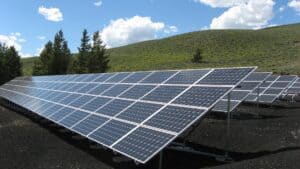

Solar power stands as the fastest growing energy technology, making up 66% of all new electric capacity added in the US in 2024.
The energy-producing powerhouses on your roof have a typical lifespan of 25 to 35 years, and they will need replacement. The panels’ composition offers excellent recycling potential – 85% consists of commonly recycled materials like glass, aluminum, copper, and plastic. New Mexico residents have a great chance to recycle their solar panels effectively.
Recycling helps reduce raw material mining needs for silicon, aluminum, silver, and rare earth elements. The numbers tell a compelling story – a leading recycler recovered 3.5 million pounds of aluminum and more than 365,000 pounds of valuable materials including silver, copper, and silicon in 2024. The process protects local ecosystems from toxic waste.
This piece covers everything about recycling solar panels in New Mexico – from its importance to locations and processes involved.
Why Solar Panel Recycling Matters in New Mexico
The solar power boom creates a hidden challenge. What happens to panels after their useful life matters as much as their energy production. By 2030, the United States will have to deal with nearly one million tons of solar panel waste. New Mexico needs solar panel recycling not just as good practice but as a key to its eco-friendly future.
Environmental risks of improper disposal
Solar panels don’t belong in regular trash. These panels contain small amounts of heavy metals like lead and cadmium that can escape into nature if not handled properly. Broken panels in landfills or unmanaged sites let these substances seep into soil. The problem doesn’t stay in one place either.
“Rain and snow create a direct pathway from damaged panels to natural waterways,” explains environmental specialists. This runoff spreads through entire ecosystems as pollutants build up in fish and wildlife, reaching areas way beyond the original disposal site.
Soil contamination brings another challenge. Heavy metals make soil recovery expensive and difficult. Land becomes unusable for:
- Agriculture
- Development
- Natural habitats
Some areas stay contaminated for decades. So proper solar panel recycling becomes vital to protect New Mexico’s water resources and landscapes.
Recovering valuable materials like silicon and aluminum
Old solar panels are a rich source of materials. Glass and aluminum make up more than 85% of a solar panel’s recyclable components. These materials have real value that shouldn’t end up wasted in landfills.
Silicon, aluminum, and glass make up most recyclable parts, while silver, copper, and other metals add extra value. Special recycling methods can extract these materials to make new panels or other products.
Modern facilities can recover up to 95% of a panel’s original material value. Silver extraction remains technically complex due to tiny quantities, but its high value justifies the investment.
“By 2035, recycled materials from retired panels could provide over 50% of the silver needed for new PV, plus over 30% of the aluminum, silicon and glass,” notes research from the National Renewable Energy Lab. This creates a sustainable supply chain that makes solar truly green.
Reducing landfill waste and emissions
Solar panel recycling cuts down waste in New Mexico’s landfills. U.S. panel waste could reach 10 million tons by 2050, so keeping this material out of landfills is vital.
Recycling uses less energy than mining and refining new materials. This creates two environmental benefits – less mining damage and lower carbon emissions. Industry experts say that “Using existing materials makes the solar industry more self-sufficient and less vulnerable to market fluctuations in new materials”.
New Mexico’s Environment Department backs proper solar panel recycling. They’ve added clear rules for waste generators and management facilities to keep panels away from sensitive areas. This helps homeowners and businesses across the state handle disposal better.
The message is clear – recycling solar panels keeps New Mexico beautiful and saves valuable resources. It completes solar energy’s journey as a truly clean power source from start to finish.
Understanding the Lifecycle of Solar Panels
Solar panels have a finite lifespan. Unlike other renewable energy sources, they follow predictable patterns of wear and efficiency loss as time passes.
Typical lifespan of residential and commercial panels
Modern solar panels are built to last. Residential and commercial panels typically work for 25-30 years. They don’t just stop working after thirty years. The energy production drops gradually below the manufacturer’s promised levels.
Panel durability gets better each year. A Berkeley Lab survey shows the average operational lifespan has grown from 20 years in 2007 to 25-35 years in 2025. These energy collectors are really resilient because they have no moving parts. Quality units can handle winds up to 140 mph and hailstones about 1 inch in diameter falling at 50 mph. Manufacturers test their panels extensively before release.
When panels become inefficient or damaged
Degradation causes solar panels to lose efficiency. The median degradation rate reaches about 0.5% each year. After 25 years, panels work at 87.5% of their original output. Premium manufacturers offer better options with rates as low as 0.3%, keeping 93% efficiency after 25 years.
The steepest efficiency drop happens right after installation. Light Induced Degradation (LID) creates a one-time loss of 1-3% efficiency when sunlight first hits the panels[112]. The degradation continues steadily afterward.
Weather conditions can speed up deterioration. Solar panel materials break down faster in excessive heat than in cooler areas. High winds, heavy rains, and hail can damage components and accelerate degradation. Water can seep through minor nicks and scratches, which affects performance.
Signs your panels may need replacement
Early detection of deterioration helps avoid extended periods of poor performance. Here are key signs that your solar panels need attention:
- Decreased energy output: Less electricity production on sunny days signals problems
- Visible physical damage: Cracks, discoloration, broken glass, or delamination (separation of panel layers) indicate issues
- Unusual electric bills: Sudden increases in electricity costs without changes in usage patterns
- Hot spots: Excessive heat in certain areas can damage cells and leave burn marks
- Snail trails or discoloration: Yellowing or browning shows degradation
Panel failure rates are incredibly low – just 5 panels out of 10,000 annually based on a study of 50,000 U.S. systems. Regular monitoring of these warning signs helps optimize system performance before recycling becomes necessary.
Regular cleaning and professional checks extend your panels’ useful life. Replacement and recycling make sense when efficiency drops below 80% of the original rating, the typical warranty threshold, or multiple components fail.
How Solar Panels Are Recycled
Solar panels need a specific recycling process to transform them into valuable resources. New Mexico’s proper solar panel recycling uses proven methods that maximize material recovery and protect the environment.
Step 1: Dismantling the frame and junction box
The recycling process starts with careful disassembly. Technicians first remove the aluminum frame and junction box from the solar panel. These parts detach easily and become the first materials recovered. The aluminum frame makes up about 10% of a typical panel and can be recycled completely.
The aluminum goes straight into proven metal recycling streams where it becomes raw material for new products. The junction box and copper wiring go to electronics recycling facilities. This first step recovers much of the panel’s weight and value.
Step 2: Glass and plastic separation
Glass separation from other materials happens after frame removal. Glass makes up approximately 75% of a typical silicon-based panel, making this step vital. Three main methods exist for separation:
- Thermal processing: The panel undergoes pyrolysis at temperatures between 300-650°C, which burns away polymer encapsulants and separates glass from other materials. This method breaks down the laminate structure effectively.
- Mechanical processing: The panel gets shredded into pieces approximately 5mm or smaller. Vibrating screens then separate glass fragments from the ethylene vinyl acetate (EVA) and other materials.
- Chemical processing: Chemical solutions dissolve the adhesives binding the layers together, allowing clean separation of glass and other components. This method works well but takes longer, sometimes up to 10 days.
Clean, crushed, and sorted glass becomes the next step. High-quality recovered glass creates new solar panels, while lower grades become fiberglass or construction materials.
Step 3: Silicon and metal recovery
Advanced facilities use thermal, chemical, and electrical techniques to isolate valuable materials in this challenging yet profitable phase:
Thermal processing turns plastic encapsulants into vapor, revealing the semiconductor cells. Chemical baths separate metals like silver, copper, and lead. Special etching processes recover the ultra-pure silicon.
Silicon wafers go through cleaning to remove remaining coatings or metals. Hot orthophosphoric acid removes the passivation layers. This careful separation recovers up to 94.46% of silicon through alkaline etching and 94.25% through acidic etching.
The process also recovers other valuable metals like silver with up to 99.997% purity. These materials become raw ingredients for new solar panels or electronic products.
Thin-film vs crystalline silicon recycling
Thin-film and crystalline silicon panels need different recycling approaches. Crystalline silicon (c-Si) modules, which lead the market, contain an aluminum frame, glass, copper wire, polymer layers, silicon cells, and a plastic junction box.
Thin-film panels (such as CdTe or CIGS technologies) take a different path. These panels first get shredded, then go through leaching in a special drum for 4-6 hours to remove the semiconductor film. A mixture of sulfuric acid and hydrogen peroxide treats the remaining materials.
Metal compounds separate through sodium hydroxide precipitation after chemical treatment. This method recovers about 95% of semiconductor materials and 90% of glass. These materials often go directly into making new thin-film panels.
One U.S. manufacturer runs dedicated recycling facilities just for thin-film panels, recovering semiconductor materials like cadmium and tellurium along with glass and copper.
New Mexico residents can make better choices about panel disposal by knowing these recycling steps. Choosing certified recyclers helps protect the environment and conserve materials across the state.
Solar Panel Recycling in New Mexico: Current Landscape
New Mexico’s solar landscape is changing faster as the state welcomes renewable energy. This growth brings up questions about handling old solar equipment.
Overview of recycling facilities in the state
New Mexico offers more options to recycle solar panels, though the infrastructure is still developing. Several companies now serve the state and provide various recycling solutions:
We Recycle Solar stands out as another player that offers recycling solutions for solar panels, batteries, and other equipment in New Mexico. They follow all federal and state regulations and work mostly with larger projects instead of individual homeowners.
Convalt’s recycling facility marks an exciting development. This 1 GW capacity facility will operate alongside Convalt’s solar manufacturing operations in New Mexico. The strategic location supports a complete circular approach to renewable energy manufacturing.
Most New Mexico facilities don’t handle small residential projects. We Recycle Solar, for example, works with larger commercial and utility-scale decommissioning projects that have minimums around 100 panels.
Recent initiatives and state support
The New Mexico Environment Department (NMED) supports solar panel recycling efforts. The department backed the designation of solar panels as universal waste, which gives needed regulatory clarity to generators and waste management facilities across the state.
This classification helps divert wastes with toxic metals and stops improper dumping in environmentally sensitive areas. Simple panel disassembly won’t trigger treatment regulations, but mechanical shredding should only happen at designated facilities.
The state pushes toward sustainability and creates a better environment for solar panel recycling. New facilities continue to emerge and handle more end-of-life solar panels while focusing on material recovery.
Challenges faced by local recyclers
Solar panel recycling in New Mexico faces several obstacles despite growing support. Hazardous waste regulations pose a big challenge – damaged panels need the Toxicity Characteristic Leaching Procedure (TCLP) test for exposed toxic metals. Panels cannot be recycled if leachable toxic metal levels exceed thresholds.
Scale limitations affect accessibility. Companies set minimum quantities:
- SolarCycle: 500 panel minimum (approximately 200 kW capacity)
- First America: 5,000 lbs minimum (about 125 panels or 50 kW capacity)
The biggest problem lies in current recycling methods that raise environmental and safety concerns. Common techniques include:
- Thermal delamination (pyrolysis) which needs significant energy
- Chemical delamination using solvents like toluene and hexane
- Chemical etching with acids for silicon recovery
New eco-friendly methods are emerging, such as electrostatic separation, laser debonding, and laser welding techniques that eliminate hazardous procedures.
New Mexico must address these challenges as solar expansion continues to create environmentally responsible renewable energy systems throughout the state.
Where to Recycle Solar Panels in New Mexico
Your solar panels won’t last forever. Here’s a guide to recycling them in New Mexico.
Certified recycling centers and drop-off points
Finding the right facility in New Mexico takes some research. Most waste management centers can’t accept solar panels because they lack specialized dismantling equipment. Your local waste management service or the New Mexico Environment Department can provide a list of certified recyclers that handle solar panels.
Before you contact recycling facilities, have these details ready:
- Number of panels you want to recycle
- Panel type (crystalline silicon or thin-film)
- Current condition (working, damaged, or broken)
- Location for pickup or delivery
Some facilities set minimum quantity requirements or charge fees based on panel weight or condition.
Manufacturer take-back programs
Panel owners often overlook a budget-friendly option – manufacturer recycling programs. These programs work best if your panels are still under warranty.
Here’s how to check your manufacturer’s recycling services:
- Visit the manufacturer’s website for recycling details
- Call their customer support
- Review your original purchase documentation
“Some PV panel manufacturers offer their own take-back and recycling programs for scrap, warranty returns, and end-of-life,” according to industry experts. These programs include panels removed early due to damage or warranty issues.
Manufacturers have strategic collaborations with recycling facilities nationwide. New Mexico residents benefit from these partnerships through reduced or eliminated shipping costs to distant recycling centers.
Community collection events and local programs
Areas with many residential solar installations often host community recycling events. These events let you drop off panels without arranging transport to far-away facilities.
You can learn about upcoming collection events by:
- Asking your city’s public works department
- Reaching out to your local utility provider
- Following sustainability offices on social media
- Getting community newsletters
Local solar installers can help too. Installation companies know reliable recycling partners and regional collection programs. They’ll point you in the right direction even if they don’t handle recycling themselves.
New Mexico offers specialized services for large-scale solar system removal. These services handle everything from taking panels apart to transportation and processing – perfect for commercial installations or community solar projects.
Solar panel use keeps growing in New Mexico, and so do recycling options. New programs pop up regularly, so keep checking available resources. The digital world of recycling gets better as the industry recognizes the need to handle old solar equipment properly.
Legal and Safety Considerations
Getting familiar with legal requirements is your first step to properly dispose of solar panels in New Mexico. These regulations protect you and the environment from harmful effects.
Hazardous waste classification in New Mexico
New Mexico has good news for solar panel owners. The state specifically exempts solar panels from hazardous waste requirements at licensed recycling facilities. This simplified process makes responsible disposal easier than states like Arizona or Colorado that don’t have such exemptions.
Your panels are safe during regular use. The strong encapsulant keeps toxic metals from leaching out in intact panels. However, damaged or improperly discarded panels could release harmful substances like cadmium or lead.
EPA and state-level recycling regulations
The Resource Conservation and Recovery Act (RCRA) sets federal regulations for solar panel disposal nationwide. Panels become solid waste once they reach the end of their life cycle.
Damaged panels need a Toxicity Characteristic Leaching Procedure (TCLP) test to detect exposed toxic metals. This test shows if harmful substances could leak into soil or groundwater under landfill conditions.
The Environmental Protection Agency announced plans in October 2023 to include solar panels in universal waste regulations. This change would make management requirements simpler while protecting the environment. The existing regulatory framework stays in place until then.
Documentation and transport requirements
The right documentation shields you from future liability. You should keep these documents when recycling solar panels in New Mexico:
- Certificates of Recycling that confirm proper disposal
- Asset Transfer Forms with pickup details and final destination
- TCLP test results for damaged panels
Panel classification determines transportation requirements. Hazardous waste panels need a manifest system to track their movement from your location to the recycling facility. Non-hazardous panels have fewer restrictions but might still need documentation under state rules.
Residential solar owners find it easiest to work with certified recyclers who handle all documentation. Many recyclers use GPS-enabled tracking to show you exactly where your panels go at the end of their lifecycle.
Note that intact panels containing heavy metals like lead or cadmium need proper handling. Federal regulations make recycling easier through conditional exclusions like the transfer-based exclusion, which reduces requirements for materials sent to legitimate recyclers.
How You Can Support Solar Panel Recycling Locally
Your individual actions today will shape how we handle solar panel recycling in New Mexico tomorrow. The way you manage your renewable energy choices now impacts future waste management.
Choosing responsible solar installers
Solar companies differ in their waste handling approaches. The best installers have clear plans about what happens to panels after their useful life ends. You should ask direct questions about their recycling methods and promises. The New Mexico Environment Department backs installers that properly handle toxic metal waste.
You can verify credentials through organizations like NABCEP (North American Board of Certified Energy Practitioners). Their certified experts usually follow higher environmental standards.
Educating your community
Knowledge about solar panel recycling needs to spread. Simple chats with neighbors, friends and family can spark changes in your community.
You might want to set up info sessions at local libraries or community centers. People are often amazed to learn that proper recycling can recover up to 95% of a panel’s value.
A social-first approach works well too. You can highlight local recycling events or share the New Mexico Environment Department’s guidelines about panel disposal.
Extending panel life through maintenance
Good care makes panels last longer. Here’s the quickest way to clean them:
- Use soft brushes or sponges
- Pick mild, non-abrasive soap
- Keep water pressure low (skip power washers)
Clean your panels during early morning or evening hours when they’re cool. Panels might crack if cold water hits their hot surface.
Take five minutes each month to check system performance data. Most manufacturers’ apps make monitoring easy. This quick check helps catch issues early.
Keep nearby trees trimmed to avoid shade that cuts efficiency and speeds up wear.
Note that panel maintenance does more than protect your investment, it buys time until better recycling systems are ready.
Conclusion
This piece explores how solar panel recycling shapes New Mexico’s renewable energy future. Your old panels are packed with valuable materials – silicon, glass, and aluminum that can be given new life through proper recycling channels. Solar panel recycling companies specialize in handling this process and turn what could be waste into reusable resources.
Recycling your panels does more than keep them out of landfills. The process helps reduce new mining operations and stops harmful substances from seeping into New Mexico’s soil and water. This approach makes solar energy sustainable from the day you install panels until they’re retired.
Your panel’s lifecycle knowledge helps with future planning. Most systems will work reliably for 25-35 years before their efficiency drops too low. Smart solar strategy includes planning for proper disposal right from day one.
New Mexico’s recycling options have grown over the last several years. The state has made things easier by exempting properly recycled panels from hazardous waste rules. The biggest problem remains the cost difference between recycling and landfill disposal.
You can create positive change through smart choices. Look for installers with a steadfast dedication to recycling, take good care of your system, and help others learn about responsible disposal. These steps help tackle this growing challenge.
Solar panel recycling delivers on clean energy’s promise. While recycling costs more than landfill disposal now, its environmental benefits make it worth the investment. On top of that, as recycling tech improves and more facilities open across New Mexico, costs should drop while recovery rates get better.
Solar’s future depends on both new installations and responsible end-of-life handling. Proper recycling practices help your commitment to renewable energy come full circle. This creates a truly sustainable path forward for New Mexico’s energy scene.